An Introduction to Lobster
Lobsters are large, marine, decapod crustaceans with long bodies, muscular tails, and ten legs, typically inhabiting cold-water seafloor crevices. They have a hard exoskeleton (molted to grow) and two large claws—a crusher and a pincher—used for hunting, feeding on mollusks, crustaceans, and fish.
Key Characteristics and Facts:
- Appearance & Species: While commonly brown, green, or blue, they turn bright red when cooked due to heat breaking down proteins. Common types include the American lobster (clawed) and Spiny lobster (no claws).
- Biology: They have, on average, 10 legs total, including the claws. They can live up to 100 years and regenerate lost limbs.
- Diet: Lobsters are nocturnal scavengers that eat fish, crabs, clams, and other crustaceans.
- Habitat: They prefer rocky, sandy, or muddy bottoms in cold oceans, where they hide during the day and are active at night.
- Culinary Value: Known for a sweet, delicate flavor, they are highly valued in seafood cuisine, commonly served boiled, steamed, or in dishes like lobster rolls.
Molting: They shed their shells to grow, often eating their discarded shell to replenish calcium.
Historically, lobsters were considered "peasant food" and used as fertilizer or bait before becoming a luxurious delicacy.
Our Lobster Range
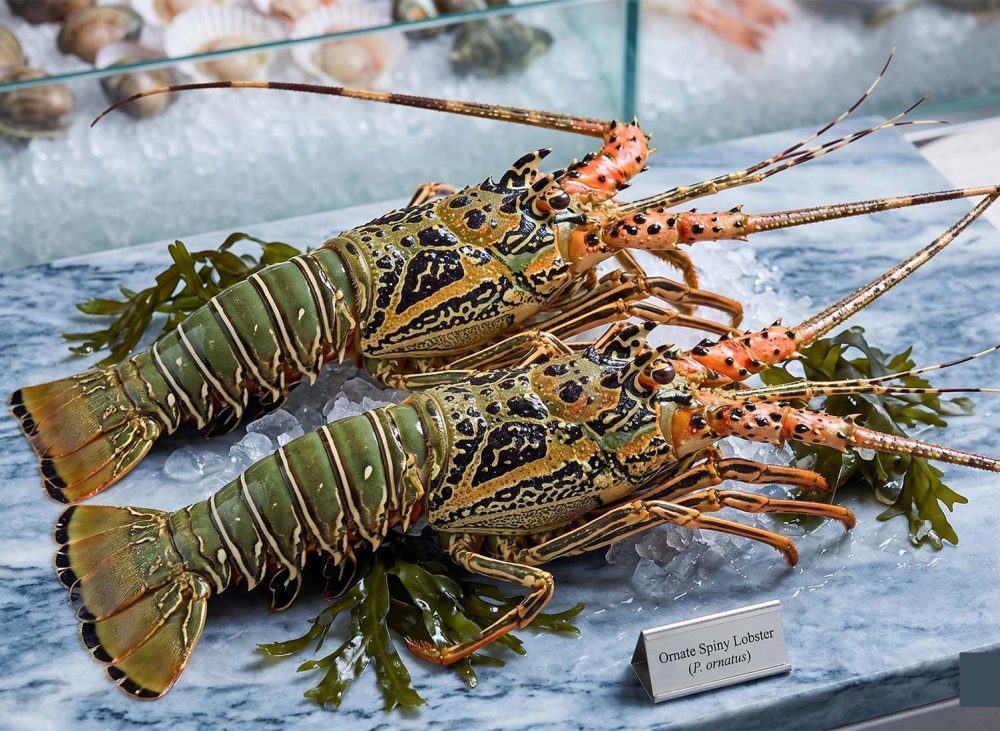
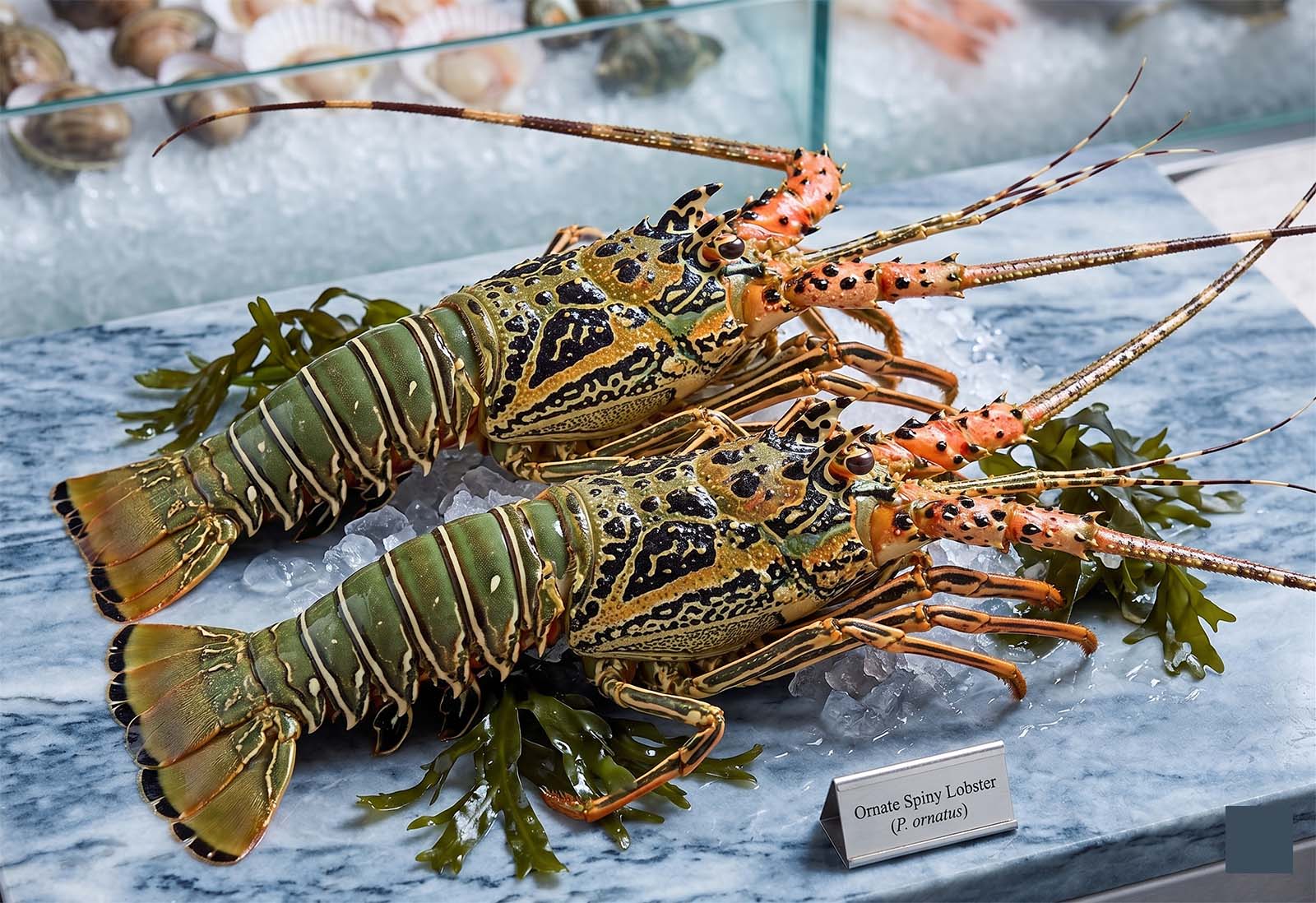
1.Ornate Spiny Lobster
Panulirus ornatus
The largest and most visually striking of Sri Lanka's spiny lobsters, the Ornate Spiny Lobster is instantly recognisable by its bold, colourful markings and impressive size. Highly prized in premium seafood markets for its generous, firm, sweet meat, it is a true centrepiece for fine dining presentations. Wild caught from Sri Lanka's coastal waters, available in weight ranges from 300/500g up to 1.5–2kg.
2.Sand Lobster
Panulirus homarus
A premium spiny lobster variety known for its firm texture and rich, naturally sweet flavour. The Sand Lobster is wild caught from Sri Lanka's coastal waters and widely valued by both local high-end restaurants and international buyers. Available in weight ranges from 300/500g up to 1.5–2kg.
3.Bamboo Lobster
Panulirus versicolor
Named for its distinctive banded colouring reminiscent of bamboo stalks, this striking spiny lobster offers the same prized sweet, delicate meat that defines premium lobster cuisine. Wild caught from Sri Lanka's coastal waters, available in weight ranges from 300/500g up to 1.5–2kg.
Life Cycle of Lobster
The life cycle of a lobster is a complex journey of growth through constant molting, beginning as a tiny planktonic larva and potentially lasting over 100 years. For species like the American lobster, only about 0.1% of larvae typically survive to adulthood.
Stages of the Lobster Life Cycle
Egg Stage (9–12 Months)
- Females carry thousands of fertilized eggs (as many as 100,000) under their tails, attached to feathery "swimmerets".
- The eggs, often called "berries," change color from dark green to black and eventually red as the embryo develops.
Larval/Planktonic Stage (3–10 Weeks)
- Once hatched, tiny mosquito-sized larvae float near the ocean surface.
- They undergo three molts (Stages I–III) while drifting with currents, feeding on other plankton.
- During this stage, they are highly vulnerable to predators like fish and jellyfish.
Post-Larval/Puerulus Stage (Critical Transition)
- At the fourth molt, the larva begins to resemble a miniature adult lobster.
- It swims downward to "settle" on the seafloor, searching for a rocky or sandy habitat to hide.
Juvenile Stage (1–5 Years)
- Young lobsters remain mostly shelter-bound to avoid predators, feeding on whatever drifts into their burrows.
- They molt frequently—up to 25 times in their first 5–7 years.
Adult Stage (5+ Years)
- Lobsters reach adulthood and sexual maturity around 5–8 years of age.
Adults molt less frequently: males typically once a year, while females molt every two years, often coinciding with their reproductive cycle.
Growth Through Molting (Ecdysis)
Because their shells are hard and inelastic, lobsters must shed them to grow.
- The Process: A lobster absorbs water to swell, causing the old shell to split. It then crawls out, appearing soft and vulnerable for 1–2 weeks until the new shell hardens.
Size Increase: Each molt can increase a lobster's size by 15% and its weight by 40–50%.
Lobster mating is a complex ritual that primarily begins when a female, ready to molt, seeks out the den of a dominant male and signals her intent by releasing pheromones through her urine. After the male accepts her into his shelter, the female molts, leaving her in a soft-shelled and highly vulnerable state; it is during this brief window that the male flips her over to transfer sperm into her seminal receptacle. The male then acts as a "bodyguard," protecting the soft-shelled female for up to two weeks until her new exoskeleton hardens enough for her to safely return to the open seafloor. Interestingly, females can store this sperm for up to 15 months before finally using it to fertilize and "berry" their eggs. Throughout their lives, lobsters face a gauntlet of predators: larvae at the surface are frequently eaten by fish and jellyfish, while bottom-dwelling juveniles are hunted by crabs, octopuses, and bottom-feeding fish like cod or flounder. To survive these threats, lobsters utilize a "jet-propulsion" escape mechanism, flicking their powerful tails to rapidly shoot backward away from danger.
The Nutritional Powerhouse: Why Lobster is a Healthy Seafood Super food
Lobster is a highly efficient source of lean protein, providing roughly 19 grams of high-quality complete protein in a standard 3.5-ounce serving while containing less than 100 calories and virtually no saturated fat. It is exceptionally rich in trace minerals; a single cup can deliver over 190% of the Daily Value for selenium - a powerful antioxidant that supports thyroid health and immune function—and nearly 200% for copper, which is essential for energy production and red blood cell formation. Additionally, lobster is a significant source of vitamin B12, which is critical for nerve integrity and DNA synthesis, as well as zinc, a mineral vital for wound healing and immune response. Despite having a higher cholesterol content than some other proteins, lobster is considered heart-healthy because it is nearly devoid of the saturated and trans fats more strongly linked to cardiovascular risk. It also contains approximately 200–500 mg of heart-healthy omega-3 fatty acids per serving, which helps reduce inflammation and supports cognitive health.
Culinary Classics: Popular and Delicious Ways to Prepare Lobster
Lobster can be prepared through several traditional methods, each highlighting the meat's natural sweetness in a different way. Steaming is widely regarded as the best technique for preserving the most delicate texture and flavor, as the gentle heat prevents the meat from becoming tough. In contrast, boiling is a faster, more straightforward approach that ensures the meat is cooked evenly and remains incredibly moist, making it the go-to method for large gatherings. For those seeking a more robust flavor, grilling or broiling allows the lobster to take on a smoky char or a caramelized finish, especially when basted with garlic and herb butter. These cooking techniques serve as the foundation for iconic dishes like the lobster roll, which features chilled or warm meat on a buttery bun, and the sophisticated Lobster Thermidor, where the meat is folded into a rich, creamy sauce and baked directly in its own shell.